Light Spectrum Guide for Different Crops
Expert insights from our Zhongshan LED grow light engineering team
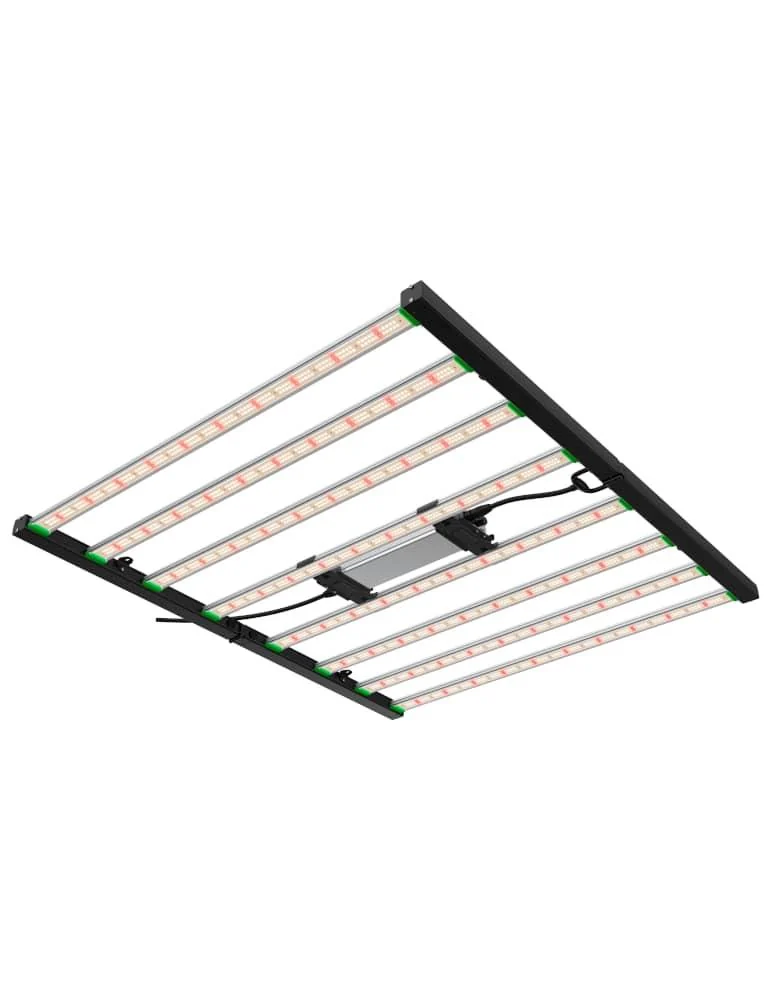
Compare crop-lighting priorities for leafy greens, herbs, tomatoes, cucumbers, peppers and medicinal plants without relying on a universal spectrum recipe.
Start with the crop and production target
Spectrum works together with PPFD, DLI, photoperiod, temperature, CO2, nutrition and cultivar. A useful commercial brief defines the desired morphology, cycle time and quality attributes before a recipe is selected.
Leafy greens and herbs
These crops are often produced at moderate intensity and short mounting distance. Blue fraction, uniformity and heat at the leaf surface are practical comparison points; the final recipe should be confirmed in the actual growing system.
Tomatoes, cucumbers and peppers
Fruiting crops generally need adequate daily light and canopy penetration. Greenhouse daylight, top-light distribution and possible interlighting often have more influence on the project than a small difference in diode ratio.
Medicinal and specialty crops
Far-red and UV treatments can be evaluated as separate channels. Response varies by genetics, dose and timing, so a controlled trial and independent dimming are more defensible than promised yield percentages.
Build a comparable RFQ
Provide crop, stage, target PPFD/DLI, mounting height, photoperiod and any reference spectrum. Request model-level spectral and electrical data from every candidate supplier.
Need fixtures matched to a project?
Send the crop, layout, target light level, voltage and quantity for a structured comparison.
Share Project Requirements

Keep a crop-lighting comparison log
When evaluating alternative spectral configurations, record the crop and cultivar, growth stage, planting density, light schedule and environmental settings. Use a consistent reference area and define which production outcomes matter to the project before the trial begins.
For procurement, connect each sample to its spectral file, fixture model, driver and control setting. If a configuration is selected for production, carry those identifiers into the order specification. This allows the purchasing team to request matching units and distinguish a repeat order from a new trial.